Beyond Survival: How One Man Rebuilt His Life After Spinal Injury

Tylam Williams is a personal trainer and cofounder of Dead Man’s Clique. Three years ago, a motorcycle accident split Tylan’s life into a clear before and after. An athlete driven by competition and constant progress, he suddenly found himself facing a spinal cord injury that left him with almost no movement or sensation below the injury level. Everyday actions most people never think twice about, such as sitting upright, balancing or managing basic daily tasks, became milestones in their own right.
While physical recovery has been modest, the deeper transformation has happened internally. What began as shock, denial, and grief gradually evolved into resilience, perspective, and a new understanding of strength. One rooted not in performance, but in perseverance.
From the depths of depression and isolation to discovering a new purpose through gratitude, adaptive sport, and advocacy, he has redefined what wellness truly means. Through the creation of his platform Movement Is Privilege, he now shares a powerful message: movement isn’t about marathons or medals, it’s about the small things most of us take for granted, and the mindset that allows us to keep going when life is turned upside down.

In this conversation with The Wellness Collective, he opens up about grief, resilience, rediscovering competition, and why the ability to move in any form is one of life’s greatest gifts.
Your story is incredibly powerful and moving. Can you share your journey from your motorcycle accident to where you are today, both physically and emotionally?
There have been major changes in how I function day to day since the accident. At first, I couldn’t even sit upright without losing balance, and basic bodily functions like breathing and blood pressure were unstable. In that sense, I’ve come a long way.
In terms of actual movement and sensation, progress has been very limited. I still have no feeling below my injury level and very little movement. Occasionally I notice small muscle twitches that weren’t there before, and my posture, physio, and the way I manage daily life at home have improved. Overall though, physical recovery is maybe 5–10 percent at most.
Emotionally, it’s been a completely different story. I spent five weeks in hospital after the accident, heavily medicated and disconnected from reality. I didn’t see sunlight or do any of the normal things that make you feel human. Doctors told me I’d never walk again, but I was in denial. I kept saying I’d be back on my feet in six months and told my friends I’d make it look easy.
Rehab was where reality hit. For three months, I had to relearn the basics, sitting up, balancing, reaching for things. That’s when I understood how far I’d fallen, from lifting weights and riding motorbikes to not even being able to hold myself upright without help. That’s when I realised how big the fight really was.
Going home was even harder. Being back in my old apartment with my girlfriend, my pets, and my mum, trying to return to my old life, broke me. I was angry, depressed, and withdrawn. I’d lie in bed for days in the dark, not showering, just crying. I hit rock bottom, but I think I needed to, to understand how much work it would take to rebuild myself.
My friends played a huge role in pulling me through. They would come to my place and drag me out, even if it was just to sit at the gym. I couldn’t do much, and it was frustrating remembering what I used to be capable of, but being around people and reconnecting with parts of my old life slowly lifted me, bit by bit.
Small wins started to matter. A few hours out with friends. A short outing the next day. Gradually, I began rebuilding routines, and along with them, rebuilding myself emotionally. It’s still a long road, with good days and bad ones, but when my body feels stronger, my mind does too. Now, step by step, I feel more able to face whatever comes next.

You have created a platform called Movement is Privilege. Can you tell me what it means to you, and why it’s such a core message in your advocacy?
Movement Is Privilege is an Instagram page and a wellness platform. I didn’t even come up with the name myself; a friend suggested it, but it couldn’t be more accurate.
To me, Movement is Privilege isn’t about running marathons or lifting heavy weights. It’s about the small, everyday things people don’t think twice about, such as standing up to grab something from a top shelf, walking on the beach, climbing stairs, parking your car or being able to go wherever you want. Those are the real privileges.
The challenge is that those simple things don’t grab attention. No one gets inspired by “go home and take something off a shelf.”, but maybe it starts with gratitude, waking up and appreciating that you can see, hear, walk, and move. Most people don’t think about it until something changes, yet it can happen to anyone at any time. You never know when it might be your last walk along the beach.
That’s the heart of Movement Is Privilege. It’s not just for people with disabilities or serious injuries, it’s for anyone who struggles with motivation, setbacks, or limitations of any kind. The message is simple: do what you can do, and value that you can do it.
If you can run 3K, that matters. If you can run 10, that’s great too. It’s not about extremes, but about appreciating your ability to move and enjoying the process instead of treating exercise like a punishment. After a long day indoors, going for a walk with a friend can be just as meaningful as an intense workout.
That’s what the page is about, and what I hope to inspire: a mindset shift from pressure and performance to gratitude and possibility, whatever your starting point.
After such a life‑altering experience, how did you first begin the process of embracing movement again, mentally, emotionally, and physically?
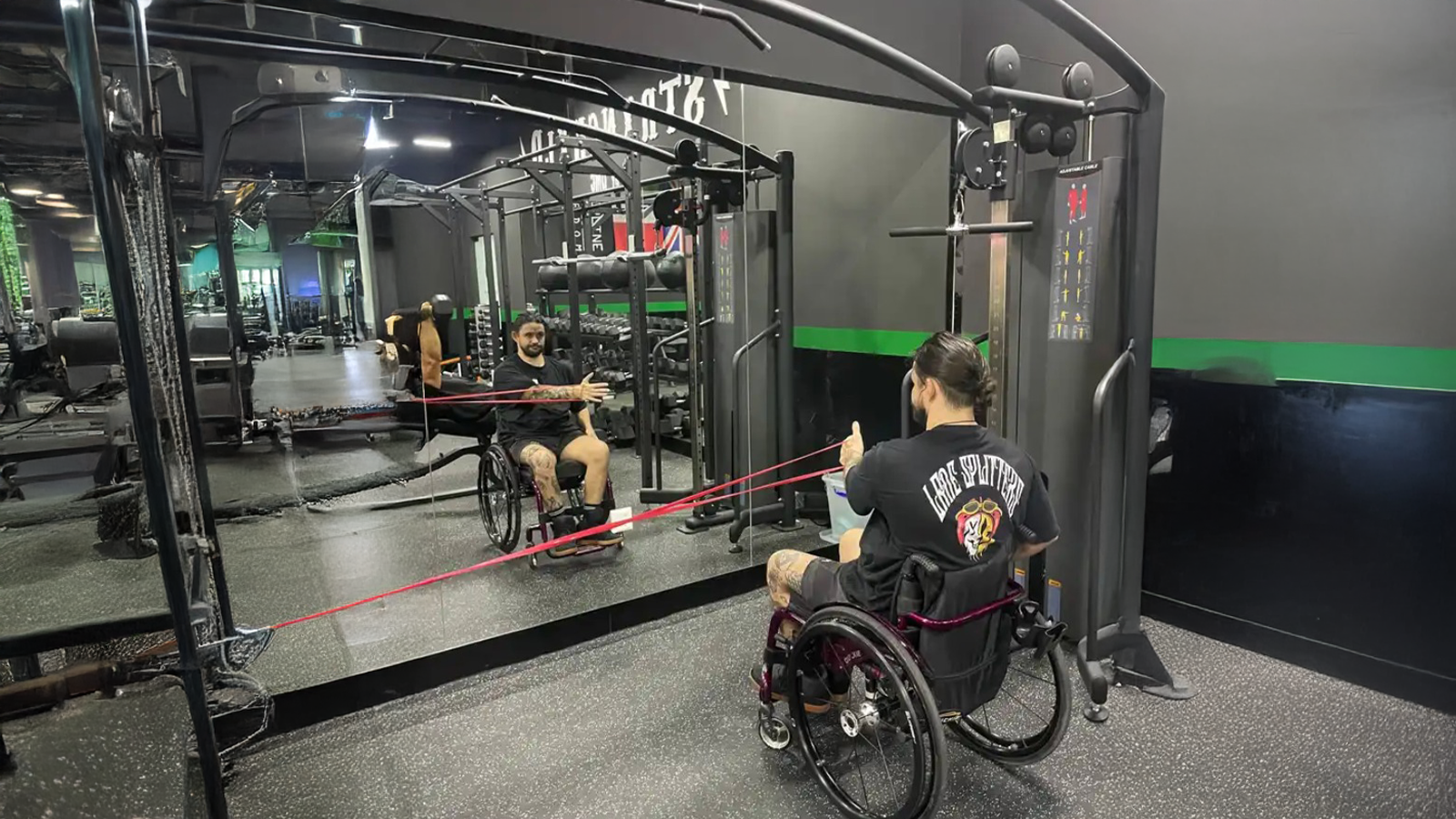
At first, I really didn’t want to go to the gym. My friends would pick me up, make sure I got there, and ask if I wanted to do any workouts. I hated it. Everything felt so different, and seeing them doing all the exercises we used to do together was frustrating. I enjoyed their company, but I hated being there.
The turning point came at the end of 2024, when I went to Thailand to have a computer chip implanted in my back. It’s still experimental technology, sending signals to help me move more over time. While there, I met people with injuries far worse than mine. They told me I was lucky: I could move my arms, take care of myself and live independently. Hearing that, I realised I had to exercise my privilege. I had to move what I could because they couldn’t.
When I returned from Thailand, I changed my approach to the gym. I stopped comparing myself to what I could do before and started focusing on new challenges and endurance-based exercises like indoor ski erg. At first, it wasn’t fun staring at a rower for hours, but I quickly discovered I was good at it. There’s a platform that ranks people in different categories ( fully able, or with varying disabilities) and I began competing. I found myself faster than most in my category. That spark of competition brought back a piece of the old me.
From there, I pushed further: 5Ks, 10Ks, half-marathons, and eventually a marathon, all using just my arms. It was grueling, my hands blistered, but I ended up breaking records. What started as gratitude transformed into a challenge I could relate to my old life. It became competitive, empowering and addictive. Each small victory fuelled the next, my physio improved, my mindset strengthened and everything began to snowball.

How has being in a wheelchair changed your perception of fitness, wellness, and what it means to “exercise your privilege”?
I’m not sure being in a wheelchair has changed my mind about fitness or wellness, but it’s definitely changed how I approach it. Before, I was hyper-competitive, always trying to be the best, to beat everyone else. Fitness wasn’t about enjoying the process; it was about winning. If I wasn’t winning, I was thinking about how to push harder, how to outperform others.
Now, it’s completely different. I focus on enjoying the process, on moving my body in ways that feel good. Fitness is no longer just about being the best, it’s about looking after your body, so you can look after your mind. If you’re doing something you don’t enjoy, you’re defeating the purpose.
What I hope people take from this is the idea of embracing the privilege of movement. So many people today struggle with anxiety or low mood, and while medications can help, nothing replaces the benefits of moving your body, such as running, walking, or a gym session, especially if you actually enjoy it. The key is doing something that makes you feel alive, not something you dread just because it’s “supposed to work.”
Exercise isn’t just about dopamine or hormones; it’s about feeling your body, enjoying the moment, and letting it support your mind. That’s the real value, and that’s what I try to focus on now.
What are some specific ways you encourage people to appreciate movement and integrate it meaningfully into their daily lives?
When I think about movement, it’s not just about hitting the gym. I encourage people to exercise, sure, but what I really value is getting outside and enjoying simple, natural movement. Even small things, such as a walk on the beach, a stroll in the park, or having your morning coffee on the balcony instead of sitting in traffic, make a huge difference.
In Dubai, people rarely walk. Most commute by car, even to get to places where they could walk. Offices dominate the day, and many spend their time under artificial lighting, missing the sun entirely. I learned the value of natural movement the hard way, after five weeks in hospital lying flat on my back, the first thing I wanted was simply to be brought into the sun. That small experience reminded me how essential it is for both physical and mental health.
So my message is simple: appreciate the little things. Step outside, move in natural spaces, meet a friend for a walk, enjoy the weather. Life doesn’t have to be all work and seriousness, even small, mindful moments of movement and connection count.
For someone struggling with their own physical limitations or facing a major setback, what advice do you have for finding strength and purpose in movement again?
If I could go back three years, the biggest lesson I’d tell myself is: you don’t have to be perfect. After my accident, I would beat myself up if a physio session went badly or if I didn’t make progress every day. Recovery isn’t about perfection though, it’s about consistency.
Even if you only have 15 minutes, do what you can. Don’t say, “I’ll wait until tomorrow.” Do the 15 minutes, and if it doesn’t feel like enough, forget about it. The next day, you get another chance. It’s about stacking small wins, building momentum slowly, and being kind to yourself while also pushing yourself when you can.
I learned the hard way that being too self-critical can be destructive. When I spent a day in bed, I’d call myself a failure, and one day would turn into three or four. That cycle makes it much harder to get back on track.
For anyone dealing with an injury, the key is to focus on consistency over perfection. Accept that failures will happen, let them go, and try again the next day. Fall, get back up, and keep moving. That’s how you rebuild.
Even after world records and competitions, the biggest challenge I face now is simply standing on my own. Achieving that will be my greatest victory.

What is your vision for Movement is Privilege for the future? How do you see it evolving, and what impact do you hope it has on the wellness and fitness industries?
Movement Is Privilege isn’t just for people of determination. I actually started the page as a way to document my own journey: what happened to me, the phases of recovery and the milestones along the way.
Long term, I want it to become something bigger. One goal is to make extreme sports more accessible for people like me (spinal cord injury survivors, stroke patients, amputees). These things are possible around the world, but they’re not easily available here. I want to change that.
I also want to do them again too. I want to work with places like Skydive Dubai to make tandem skydives accessible. I’d love to see adaptive desert buggies with hand controls, more opportunities for adaptive surfing, and ways for people with disabilities to get back into adventure sports safely. Awareness is the first step, and I hope the platform can help create enough momentum to make these experiences more available locally.
The broader message of the page, though, is for everyone: move more, appreciate what your body can do, and don’t take it for granted. If we can also raise support for spinal cord and stroke research along the way, even better.
Another big focus for me is accessibility in the built environment. Many places say they’re accessible, but the reality is different: steep ramps, steps into elevators, small design details that make independence impossible. I’d love to work with developers and planners to help design spaces that aren’t just “technically compliant”, but genuinely usable.
Movement Is Privilege has three aims: pushing my own limits again, inspiring everyone to move more and helping make Dubai more accessible for the people who live here.