The Body Detective: Ava Rodriguez’s Scientific Approach to Movement

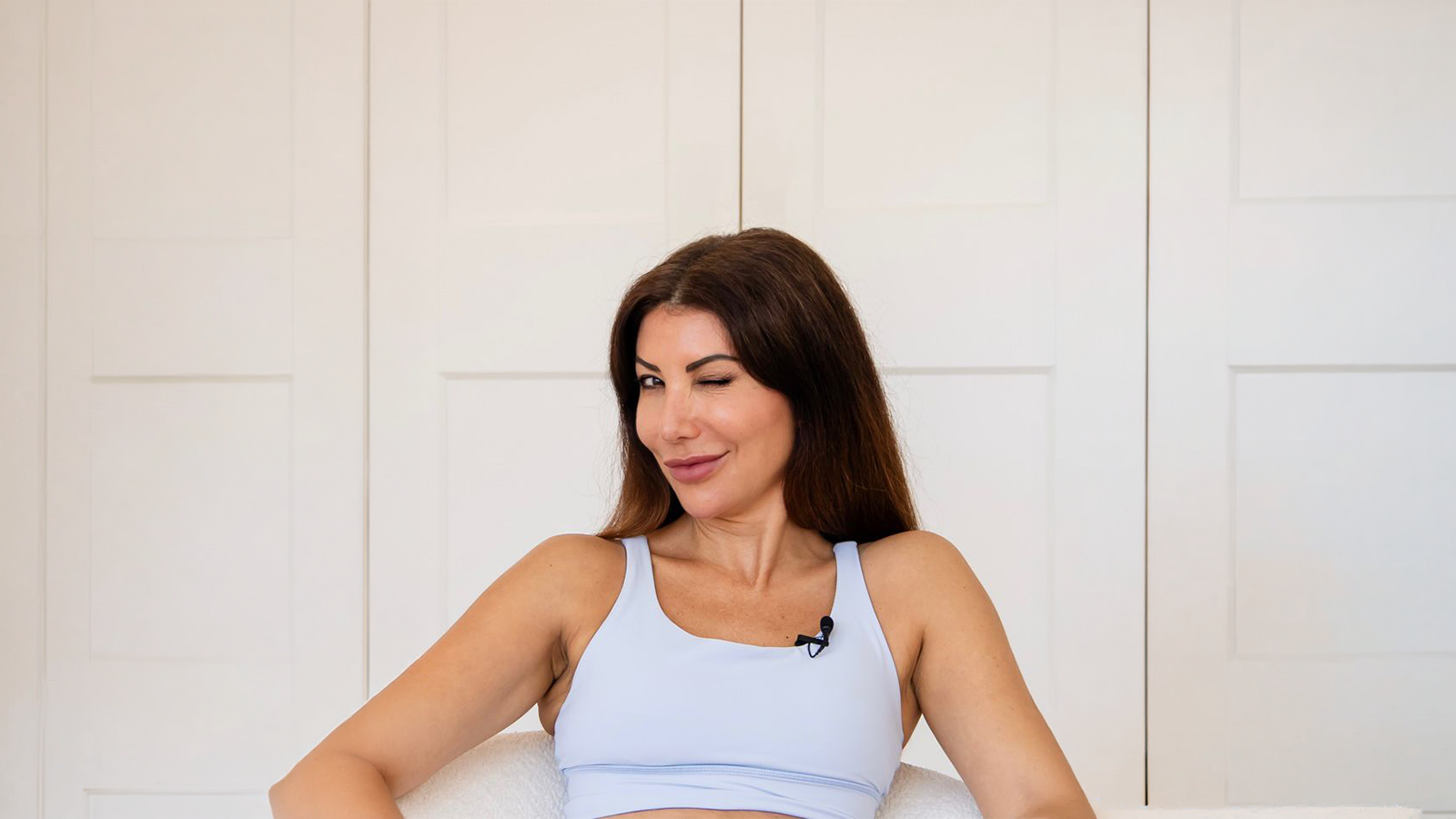
I had the chance and honor to meet Ava at FormFest this year and my God, was the encounter with her, a blessing sent from Heaven! In an industry often distracted by aesthetics, Ava Rodriguez is a detective of the human form. As the founder of the Mobility Fitness Academy (MFA), now spanning 28 countries, she has spent over a decade dismantling traditional fitness myths to bridge the gap between clinical anatomy and high-performance movement.
Ava’s philosophy was forged under a second-generation Pilates elder and deepened by ten years of intensive study with an anatomy professor. Through MFA, she equips instructors to look beyond “choreography” and address the root causes of “movement jail”- chronic pain and limitations that surface-level exercise cannot solve. By teaching the “neurological language” of joints, Ava helps practitioners move away from merely managing symptoms and toward unlocking true physical potential.
1. Take us back to the early days of your journey. What was the specific ‘spark’ or personal experience that made you realize the fitness industry was missing this critical piece of the puzzle?
It started with Classical Pilates, where I trained under a second-generation elder in London. From the very beginning, I was more fascinated by how the body worked than by simply learning exercises. I realised early on that results are not determined by the exercise itself, but by how and why it is applied. It’s not about the shapes the body can make, it’s about what is happening underneath them. In my first studio, we didn’t even use music. It was a space built around autonomy and education, where the goal was to empower people to understand their own bodies and feel confident moving well, even when we weren’t in the room.
My first major ‘aha’ moment came when I qualified as a manual therapist. Learning to palpate tissue and work directly with pain, nerves, and fear completely changed how I understood anatomy. It made me realise how much more there was to learn, and how different anatomy looks when you are working hands-on with real people, not just textbooks.
Later, when I went on to study under an anatomy professor, that perspective deepened even further. She taught me to always leave 20% on the table, because science evolves and what we believe today may be challenged tomorrow. That mindset shaped everything I do. If you are not willing to keep relearning, questioning, and letting go of old beliefs, you stop evolving, and in this industry, that means you stop truly serving people.
2. You spent ten years studying under an anatomy professor to connect dots most movement systems never bridge. How did that deep-dive change your perspective on movement?
It taught me that if I can’t read and understand why movement breaks down or becomes blocked, then I don’t truly know how to unlock it. I remember my first cadaver workshop vividly. I was in shock, because the human body looks nothing like it does in anatomy textbooks. In books, we study structures in isolation so we can digest them, but seeing the body as a complete, integrated system stays with you. It changes how you see movement, and ultimately how you teach it.
Most instructors initially raise an eyebrow when I say this, but when you move your hip, you are never just moving one muscle. Even though we know this intellectually, we still tend to think in simplified terms, like “glute medius exercises” or “front delt exercises,” while overlooking the reality that every movement involves multiple layers of tissue, muscles, ligaments, and neurological input working together. It’s a very simplified way of looking at an extremely complex system.
If you can’t see beyond muscles and surface-level movement, you miss a huge part of the puzzle. Many systems specialise in one variable of the bigger picture, and that has value, but as instructors, our role is different. We are detectives. We have to problem-solve in real time, with real bodies that don’t always behave as expected.
You can give the same exercise to ten people and see great results, and then the eleventh person responds completely differently. Suddenly, they’re stuck in what I call “movement jail.” If you don’t understand why that’s happening, you’re forced to work around pain and limitation rather than resolve it. And that’s exactly the gap I wanted to fill through my work.
3. It took over a decade of study to develop the foundation for the Mobility Fitness Academy (MFA). How did you structure your learning to move from traditional Pilates into the deep biomechanics you teach today?
I created the certification to make deep insights about the nervous system, adaptation, and how the body actually changes accessible and practical for instructors who take their role seriously and see this as a long-term career. Not everyone has the time, resources, or desire to sit in a university environment for years, but that doesn’t mean they shouldn’t have access to high-quality, evidence-informed education that they can immediately apply in real classes.
There is a huge difference between simply moving through ranges of motion and understanding how to target a joint, develop its capacity, and train its quality. That distinction changes everything about how you programme, cue, and progress people.
This type of training is vigorous because it is essentially learning a new neurological language. And I’ll be honest, it’s not “fun” in the traditional sense. But it is non-negotiable, because everything else you do depends on whether a joint is able to receive load, communicate clearly with the nervous system, and allow efficient movement.
If you don’t know how to read the motor output of the nervous system, it becomes very difficult to understand what is actually limiting someone’s progress. And you can’t solve a problem you don’t understand. That’s why I created M.F.A., to give instructors the insight to see beyond muscles and surface-level movement, and the tools to recognise whether a limitation is primarily muscular, joint-based, neurological, or a combination of all three.
It sharpens your cueing, improves your programming, and dramatically changes the results your clients get, because you are working with the body intelligently, not just hoping it adapts.

4. The Mobility Fitness Academy is now represented in 28 countries. What makes your technical approach unique compared to other mobility certifications?
Movement doesn’t belong to anyone. No one owns it, and no one is truly inventing something completely new. The uniqueness isn’t in the movements themselves, it’s in how the education is delivered and how effectively people are taught to apply it.
Personally, I learn by taking things apart until I understand every ingredient. I want to be able to close my eyes and know exactly what’s happening and why. That matters, because when you’re teaching teachers, there is a huge responsibility attached to that. There is a big difference between giving someone choreography to follow and teaching them how to think, analyse, and create for themselves. It’s the difference between giving someone music to move to and teaching them how to write the music.
I often describe it like navigation. Teaching a class is like guiding a boat across calm waters. Mentoring a teacher is passing on the skill of navigation, so they can guide others through any conditions, in any environment.
I created the education I wish I had when I was starting out, a system grounded in understanding how the human body works and how to read it like a story. From there, instructors can apply that understanding to any method they choose, whether that’s Pilates, strength and conditioning, yoga, or personal training, because all of those systems sit on the same foundation.
My M.F.A. providers around the world often tell me they came expecting a collection of drills to “fix” sticky joints. Instead, they realised they had gained access to decades of movement and neurological science. Many describe it as a veil being lifted, or as finally being given the cheat code to the human body. It allows them to see things that were always there, but that they simply didn’t have the lens to recognise before.
5. Why do you emphasize understanding why movement breaks down rather than just modifying around it?
As an instructor, learning how to adapt an exercise to the body in front of you is an important skill. It shows awareness and care. But adaptation on its own often doesn’t create lasting change. There is a big difference between working around a problem to avoid pain and understanding why that pain exists in the first place.
Many people think that feeling a strong ‘burn’ in class means they’ve had a good session or made progress, but that isn’t necessarily true. Discomfort doesn’t automatically equal improvement. And as instructors, we know that our carefully planned classes can fall apart the moment someone mentions neck pain, hip pain, or something that’s been bothering them for years.
If you only understand exercises and movement shapes, your options become limited. You’re left choosing from a small toolbox. But when you understand how to read the signals of the nervous system and what the body is actually communicating, you can choose the right approach for that individual in that moment. That’s when real change happens, not when you’re simply managing symptoms.
Without that understanding, you’re often just rearranging the session to avoid discomfort. With it, you can address the root cause and help people move forward with confidence.
6. You often talk about ‘sticky’ shoulders and neck pain. What is the most common technical misunderstanding instructors have when trying to fix these chronic limitations?
One of the biggest blind spots is assuming that completing one qualification means you truly understand the human body. Learning a repertoire or a set of exercises is not the same as understanding how joints, nerves, and tissues interact in real people.
The fitness industry is loud, and very little gets properly fact-checked. We often judge teachers by how they look or how well they can perform complex movements, especially on equipment. But being a good mover and being a good teacher are two very different things.
When you teach teachers, there is a real responsibility. Your job is not to give them more choreography, it’s to change how they see bodies, how they think, and how they problem-solve. That shift is what allows them to help people with chronic limitations, not just manage them.
7. For the average person, what are the ‘low-hanging fruit’ preventative techniques they can incorporate daily?
One of the most powerful low-hanging fruits is learning how to perform joint rotations properly, and learning them from a credible source. Many instructors come to M.F.A. saying they’ve been doing joint rotations for years. During the seminar, they often turn to me and say, “This is clearly next level.” But it’s not next level. It’s just the right level.
What they were doing before wasn’t wrong, it was incomplete. In fitness, we often imitate movements instead of truly understanding them. It’s never just about the exercise itself. It’s about knowing why you’re doing it, how to execute it with precision, and how to adjust it intelligently. That understanding is what makes or breaks the effectiveness of an exercise, and therefore the outcome.
We also confuse aesthetics with function. Looking fit or moving well in rehearsed patterns doesn’t automatically mean your joints are healthy or adaptable. Your body communicates constantly, not just during a workout, but when you’re getting in and out of the car, reaching overhead, or carrying luggage. Learning to read those signals early is preventative medicine in motion.
And finally, posture isn’t the villain. Slouching isn’t inherently harmful. Staying in one position for too long is. Movement variability and joint quality are what truly protect you long term.
8. Athletes often push through pain to reach performance. How do you reframe ‘mobility’ so they see it as a tool for speed and power rather than just ‘stretching’ or ‘rehab’?
Athletes are competitive by nature. They push through discomfort, through fatigue, and often through early warning signs, because performance matters to them. But the difference is that good athletes also measure outcomes. They pay attention to what improves their speed, power, depth, and control.
The principle of specificity means your body adapts to exactly what you expose it to. In sport, that is highly repetitive, highly specialised movement. You become extremely skilled, but that doesn’t automatically mean your joints are resilient or well supported.
We often confuse being good at a sport with being structurally functional. You can be highly skilled and still lack joint capacity. That’s why, for example, it’s not uncommon for elite dancers to need hip replacements relatively early. They are exceptional performers, but their joints have been overloaded in very specific ways for years.
When athletes understand that mobility is not stretching or rehab, but targeted joint training that improves force transfer, control, and durability, it stops being something they “have to do” and becomes a performance tool. It helps them train harder, recover faster, and stay in their sport longer.
9. As a mother running a global organization, how do you balance business with family, and has motherhood changed how you teach?
Becoming a mother taught me that joint limitations aren’t about age. I see children with restricted or clicking joints. That tells you it’s not time that steals movement, it’s a lack of the right input.
Motherhood also made me a better educator and leader. It taught me patience, empathy, and perspective. I’m raising two girls, and I’m not just raising children, I’m raising future women who I hope will feel confident building meaningful lives and careers of their own.
Of course there is always some level of “mum guilt,” especially when I’m travelling or working long hours. But I also know they learn by watching me build something of value, for my industry, for the people I serve, and for our family. They see commitment, resilience, and responsibility in action.
In my work, I see education in a similar way. The most important things for the body are often not the easiest or most glamorous. Joint training takes consistency and understanding, so part of my role is helping people appreciate why it matters and guiding them to engage with it in a way that feels empowering rather than overwhelming.
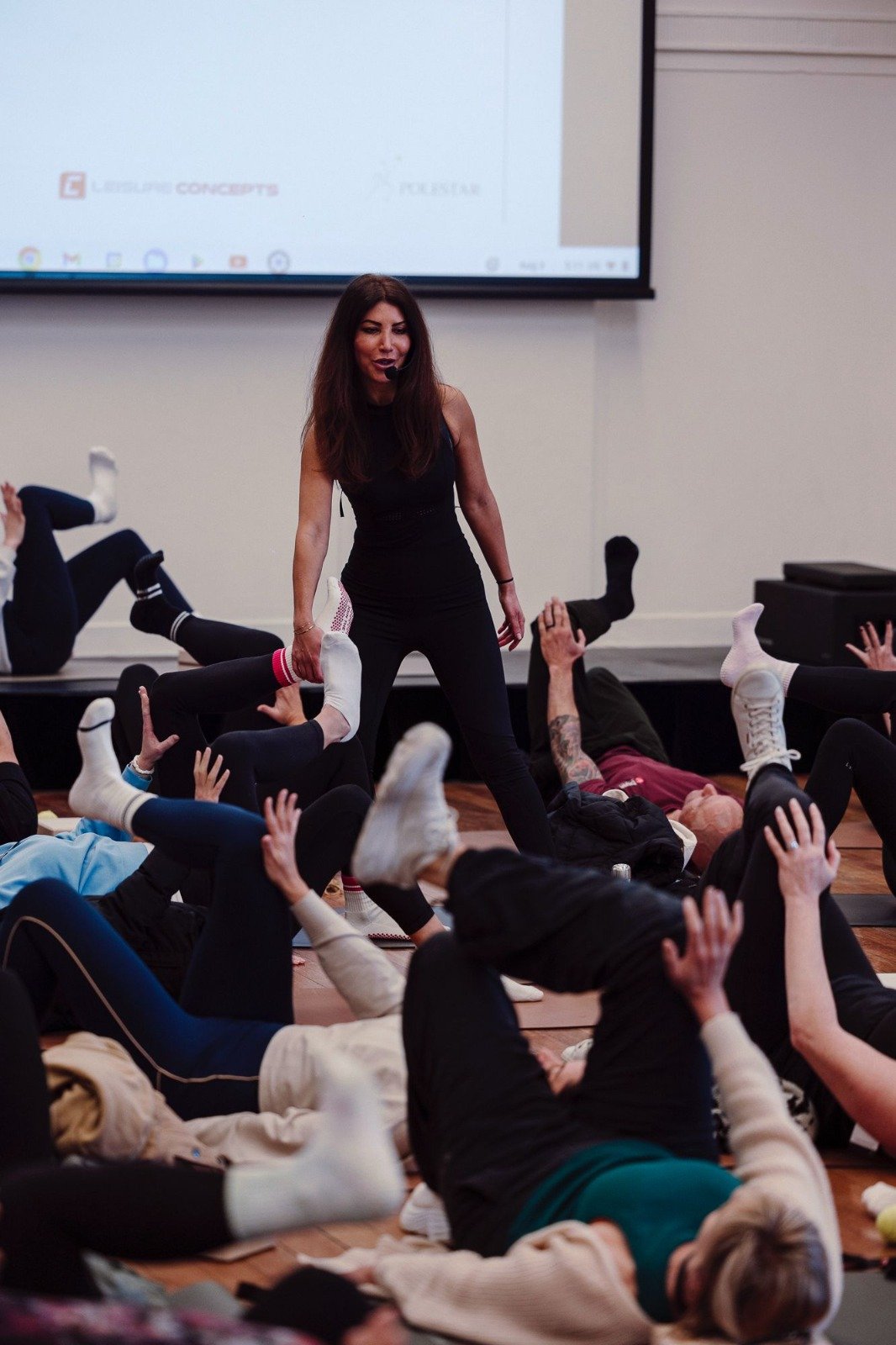
10. You were a central figure at FormFest. What were your impressions of the event and the Dubai wellness scene?
FormFest was a significant step for the region. Pulling together a first-of-its-kind Pilates event in Dubai, and doing it well, is no small achievement. There was real energy in the room and a clear appetite for growth.
What stood out to me was the contrast within the industry itself. We are in a time where visibility and influence can sometimes be mistaken for depth of education. Being a great mover or having a strong online presence is not the same as being a skilled educator. Events like this highlight both ends of that spectrum.
In an industry that is still developing formal standards in many parts of the world, there is a responsibility, especially at event level, to prioritise substance alongside popularity. Education must go beyond performance and aesthetics. It needs to be grounded in science, practical application, and duty of care.
We’ve made strong progress. The conversations are becoming deeper, and the demand for higher-level education is growing. We’re not at the final destination yet, but we are absolutely moving in the right direction.